
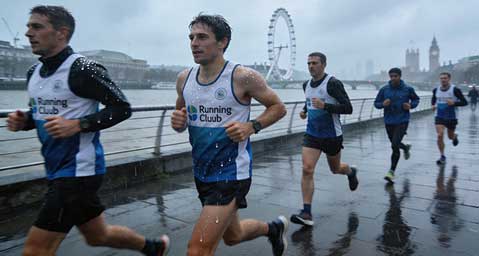
The Ultimate Club Run Guide: Elevating Your Performance and Identity
Transitioning from a casual jogger to a dedicated athlete requires more than just a pair of trainers and a sense of direction. It requires an ecosystem. In the modern running landscape, the club run serves as the vital bridge between digital training scaffolding and the structured development needed to reach elite recreational standards. This guide, curated by Coach Raye, outlines how to leverage the local club environment to master your mechanics, build unwavering consistency, and hit those increasingly stringent 2026 qualifying benchmarks.
The Ecosystem of the Modern Runner
Modern training relies on a combination of digital infrastructure and local community resources. For those at the start of their journey, digital coaching platforms provide the essential scaffolding—offering audio-guided runs that reduce initial intimidation. When you transition to a club environment, you are building upon the digital 'kudos' and badges that help maintain the 66 days of consistency required for habit automaticity.
Local clubs offer varied sessions tailored for gentle introduction and gradual progression. They provide safe training environments, often utilising traffic-free, flat, tarmac paths that are ideal for novice interval work and maintaining a consistent cadence. By joining these community-led events, the reluctant runner moves from 'trying to run' to adopting a genuine identity as a runner.
Mastering Biomechanical Efficiency
To excel in a club environment and reduce joint impact—especially for masters athletes—you must prioritise running economy. This is the energy cost of maintaining a steady pace, and it is largely dictated by your mechanics.
- Cadence and Turnover: Aim for a cadence of approximately 180 steps per minute (SPM). This higher turnover naturally leads to a shorter stride length, reducing peak ground reaction forces on the knees and hips.
- Postural Integrity: Maintain an upright posture with a slight forward lean from the ankles, not the waist. This ensures energy is directed toward forward propulsion rather than vertical oscillation.
- The Midfoot Strike: Focus on landing your foot directly beneath your centre of mass. This eliminates the 'braking' effect associated with heel striking.
- Arm Swing: Keep your shoulders relaxed and arms at a 90-degree angle to assist in balance and momentum.
Structured Drills for the Invested Athlete
Your weekly club programme should bridge the gap between slow-twitch aerobic miles and race-pace intensity. To do this, integrate specific form drills into your easy runs:
- Strides: Perform 80 to 100 metre accelerations (or up to 150 metres) focusing on 'lightness,' high knee drive, and quick leg turnover. Strides teach the body to run fast while remaining relaxed.
- Fartleks: This 'speed play' involves race-pace bursts in an intuitive environment. It builds mental resilience and the ability to surge during a race, lifting your lactate threshold over time.
Navigating the 2026 Qualifying Standards
The landscape of elite recreational running is becoming increasingly competitive. For the 2026 racing cycle, major world marathon qualifying times have been reduced by five minutes for all age groups under 60.
If you are in the 45-49 age bracket, a high-performance goal is now a 3:10:00 marathon. This requires a corresponding 10k proficiency of 42 to 45 minutes and a half marathon finish between 1:30:00 and 1:32:00.
However, simply hitting the standard is no longer enough. To guarantee entry into restricted-field events, you must target a performance 'buffer' of seven to ten minutes below the official standard. This level of intensity typically places an athlete within the top 5 percent of their demographic globally.
Training as a Professional Project
To move from intermediate participation to national class status, you must treat your training engine as a professional project. This means moving beyond linear pacing. Your club sessions should incorporate specific preparation for course topography, such as managing the eccentric load of early descents and the aerobic demand of late-stage climbs.
By aligning your performance targets with race equivalency charts and leveraging the support of a local club, you ensure that your journey is as rewarding as the destination. Whether you are chasing a 180 SPM cadence or a 2026 Boston qualifier, the club run is where the work happens.